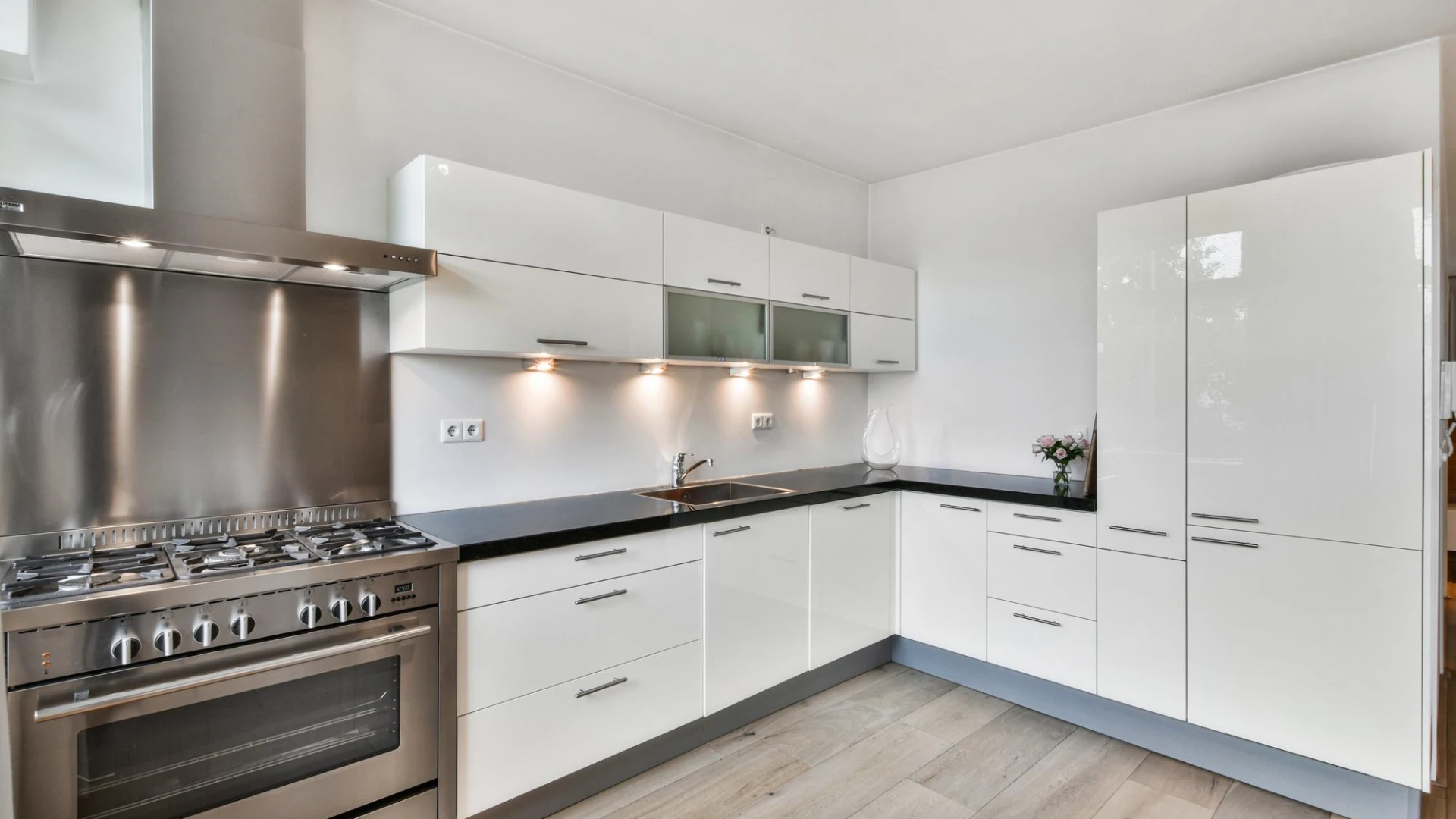
A small kitchen doesn't have to feel like a compromise. With the right design choices, a compact space can be just as functional, comfortable, and good-looking as a large one. The difference almost always comes down to a handful of decisions made early in the process, and according to kitchen fitting specialists, most of those decisions are far simpler than homeowners expect.
Here's what actually moves the needle.
Go Vertical
Most small kitchens waste their most valuable real estate: the walls above eye level. Extending cabinets all the way to the ceiling does two things at once. It dramatically increases storage, and it draws the eye upward, making the room feel taller than it is.
If full-height cabinets aren't an option, open shelving in the upper zone works well too. Keep it tidy and it adds character. A few well-placed items on a floating shelf will always look more intentional than a cluttered worktop below.
Keep the Palette Light and Consistent
Colour contrast makes a room feel smaller. When walls, cabinets, and worktops are fighting each other visually, the eye has to work harder and the space feels busier and tighter as a result.
A consistent palette of light, warm neutrals (soft whites, creams, pale greys) keeps the eye moving smoothly around the room. That continuity creates a sense of openness that darker or busier schemes simply can't match in a compact space.
This doesn't mean the kitchen has to feel bland. Texture does the work that colour contrast usually would. A matte cabinet paired with a subtly veined worktop and a textured tile backsplash gives the room depth and interest without chopping the space into visual sections.
Choose Integrated and Handleless Where You Can
Handles stick out. In a large kitchen, that's a non-issue. In a small kitchen, every protrusion adds visual noise and physical obstruction. Handleless cabinets with push-to-open or recessed grip mechanisms keep the lines clean and the space feeling uncluttered.
The same logic applies to appliances. Integrated appliances, a fridge, dishwasher, and oven all sitting behind matching cabinet fronts, make the kitchen read as one unified surface rather than a collection of separate machines. It's one of the single most effective ways to make a small kitchen feel considered and spacious rather than crammed.
Rethink the Layout Before You Buy Anything
This is where most people go wrong. They choose the units, the worktop, the appliances, and then try to fit everything into the space. The layout should come first, not last.
In a small kitchen, the work triangle (the relationship between the hob, sink, and fridge) matters more than in a large one because there's less room to compensate for a poor flow. A galley layout with the cooking zone on one side and the prep and washing zone on the other is often the most efficient use of a narrow room. An L-shape works well in a slightly wider space and naturally creates a corner storage opportunity that a galley can't offer.
Getting layout advice from experienced professionals before committing to a design can save a significant amount of money and frustration down the line. What looks right on a floor plan doesn't always feel right in practice.
Let Light In and Reflect It Back
Natural light is the best tool a small kitchen has. If there's a window, nothing should block it. Avoid tall units or shelving directly in front of a window, and keep window dressings minimal or remove them entirely.
Where natural light is limited, the finish of your surfaces matters. Gloss cabinet doors, mirrored splashbacks, and polished worktops all bounce light around the room. Even a semi-gloss paint on the walls makes a measurable difference compared to a flat matt finish.
Under-cabinet lighting is often overlooked in small kitchens, but it's one of the most cost-effective upgrades available. It eliminates the shadow that overhead lighting casts across worktops and makes the whole kitchen feel brighter and more usable.
The Takeaway
A small kitchen rewards thoughtful decisions more than a large one does. There's less room to hide mistakes, but there's also less room needed to get things right. Focus on vertical storage, a consistent light palette, clean integrated lines, a layout built around how you actually cook, and surfaces that work with available light rather than against it.
Get those five things right and the size of the room stops feeling like the main story.