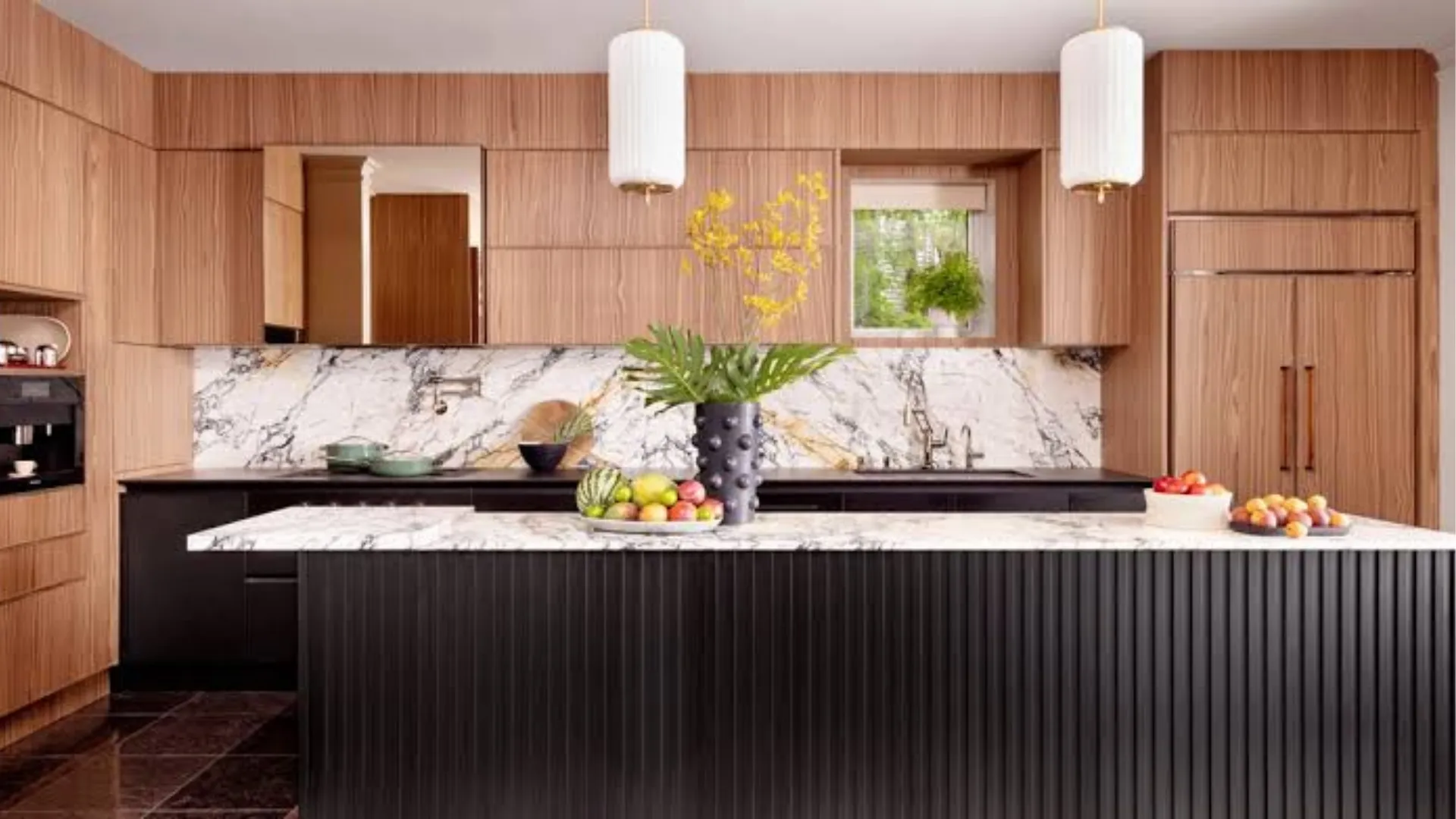
A contractor working the North Side told me recently that half his countertop consultations start the same way. A client shows him a photo of a kitchen with dramatic veined marble counters, asks how much that would run, hears the number, and immediately asks what else looks like that for less. It is not a complaint about taste. Most homeowners simply did not realize how wide the price gap is between the marble in the photo and the quartz that can pass for it once installed.
That gap exists because natural marble and engineered quartz solve different problems. Marble is quarried, cut, and shipped as a genuinely rare material, and it carries a price tag that reflects scarcity as much as beauty. Quartz is manufactured, which means a factory can replicate a marble pattern at a fraction of the cost while also fixing marble's biggest weakness, which is how easily it stains and scratches in a working modern kitchen. For homeowners seeking the elegance of marble without the intensive maintenance, quartz offers an ideal balance of style, durability, and affordability.
What follows is a practical look at where the real savings show up in a Chicago countertop project, which decisions actually move the price and which ones barely matter, and how a homeowner on a tighter budget still ends up with a kitchen that reads as expensive to anyone who walks in.
The Real Reason High-End Kitchens Look Expensive
Walk through any high-end kitchen showroom and the countertop is doing more visual work than most homeowners realize. Cabinets, hardware, and lighting all contribute, but the countertop sets the tone for the whole room because it is the largest continuous surface at eye level. A dramatic veined pattern reads as luxury almost instantly, which is exactly why designers lean on it so heavily in staged listings and renovation photos.
The catch is that "looking expensive" and "being expensive" are two separate questions, and the gap between them has narrowed considerably over the past decade. Engineered quartz manufacturing has improved to the point where replicating high-end marble veining no longer requires the premium once attached to that look. A slab that mimics Calacatta or Carrara marble convincingly now sits well within reach of a normal remodel budget rather than only the top tier.
Chicago's renovation market moves fast enough that fabricators compete hard on price for these popular patterns, since so many homeowners are asking for the same general look. That competition benefits buyers directly, because it means shopping around for the same style of slab across two or three local fabricators can turn up meaningfully different pricing for what is essentially the same product.
What Calacatta Arno Actually Costs Versus Its Reputation
Homeowners assume anything with "Calacatta" in the name sits automatically in the premium tier, and that assumption is not always accurate once actual quotes come back. calacatta arno price tends to land in a more approachable range than its dramatic appearance suggests, since it is a manufactured quartz pattern rather than quarried Italian stone, and the production cost reflects that even though the visual impact does not suffer for it.
This matters most for homeowners who assumed the veined marble look was simply out of reach for their renovation and defaulted straight to a plain white or beige quartz without ever getting a real quote on something bolder. A five-minute conversation with a fabricator about actual current pricing, rather than an assumption based on the name or the photos online, sometimes reveals that the dramatic option costs barely more than the safe one.
Square footage plays a bigger role in the final number than pattern choice for most standard kitchen layouts. A modest galley kitchen with a smaller total counter area might end up spending less on a bolder pattern than a sprawling island kitchen spends on the plainest slab in the showroom, simply because the total material required differs so much between the two layouts.
Where Homeowners Waste Money on Countertops
The single biggest budget mistake in countertop shopping is picking a slab before understanding the fabrication and installation costs that sit on top of the material price. Edge profiles, the treatment where two pieces meet at a seam, and the complexity of cutting around a sink or cooktop can add up to a meaningful percentage of the total bill, and those costs vary less by material choice than most people expect.
Overbuying is the second common trap. Homeowners frequently order more overhang or a thicker slab edge than the kitchen actually needs, adding cost for a detail that barely registers visually once the installation is finished. A standard edge profile on a properly sized countertop almost always looks clean and intentional, and the upgrade to a heavily beveled or waterfall edge only makes sense when the homeowner genuinely wants that specific look rather than assuming it is required for a finished appearance.
Timing matters more than most renovation guides mention. Fabricators sometimes discount remnant pieces or slightly older inventory that is functionally identical to current stock but needs to move before a showroom update. Asking directly about remnants or current specials, rather than only looking at the standard catalog pricing, can turn up real savings on exactly the same quality of material.
Digging Through the Specials Bin the Smart Way
Every fabricator carries a rotating selection of discounted material, and browsing cheap quartz countertops before committing to a full-price slab is one of the more underused strategies in kitchen renovation. These discounted options are not lower-quality quartz. They are typically overstock, discontinued colorways being phased out, or slabs left over from larger commercial orders, all sold at reduced pricing simply to clear inventory.
The tradeoff with specials pricing is availability rather than quality. A homeowner might find the perfect pattern at a steep discount but only in a limited quantity, which works fine for a smaller kitchen but can be a problem for a large island that needs a bigger continuous piece. Checking specials early in the planning process, rather than after cabinets and layout are already finalized, gives more flexibility to design around whatever discounted slab happens to be available.
Contractors who work with the same fabricators repeatedly often know which specials are worth chasing and which are being discounted for a reason, such as a pattern that photographs well but has inconsistent veining in person. Asking a contractor or designer directly whether they have seen a particular discounted slab installed before is a quick way to avoid a disappointing surprise after the material is already cut and delivered.
Why Shopping Local in Chicago Still Wins
For homeowners comparing options across the metro area, searching granite chicago alongside quartz options is worth doing even for a kitchen leaning toward engineered stone, since many local suppliers carry both materials and can offer a side-by-side comparison in the same showroom visit. Seeing granite and quartz slabs next to each other under the same lighting makes the practical differences, weight, veining consistency, and price per square foot, much easier to evaluate than researching each material separately online.
Chicago's countertop market is competitive enough that local suppliers regularly adjust pricing to stay attractive against national chains, and that competition tends to benefit homeowners willing to get quotes from more than one source before committing. A quote from a big-box retailer and a quote from a local fabricator for the exact same slab can differ more than people expect, particularly once installation and edge work are factored into both numbers.
Working locally also simplifies the templating process, where a fabricator measures the kitchen precisely before cutting the slab. In-person templating tends to catch small layout issues, an outlet placed awkwardly close to where a sink cutout needs to go, for instance, that remote or rushed measurements sometimes miss, and catching that kind of detail before fabrication saves a costly redo later.
Local Fabricators Change the Math
Shipping distance affects kitchen countertops pricing more than most renovation budgets account for. A slab sourced from a fabricator located within the Chicago metro area avoids the freight costs and handling risk that come with material shipped in from farther away, and that savings gets passed along in the final quote more often than homeowners expect. Choosing a local supplier can also shorten lead times and reduce the likelihood of delays or damage during transit, making the entire countertop installation process more efficient.
Local fabricators also tend to move faster on installation scheduling, since they are not coordinating shipments across a wider region. For a kitchen renovation where the countertop is one of the last steps before a family can use the space normally again, shaving even a week or two off the installation timeline has real value beyond the dollar figure on the invoice.
There is also a service quality argument that gets overlooked in pure price comparisons. A local fabricator who handles installation and any follow-up issues directly, without a third party involved, tends to resolve problems faster if a seam needs adjustment or a corner needs a second look after installation. That responsiveness rarely shows up on a price sheet but matters considerably once the project is underway.
Warranty terms are another detail that gets buried in the excitement of picking a pattern. Local fabricators are generally easier to reach if a warranty issue comes up months or years down the line, since the same team that measured and installed the countertop is still nearby and accountable, rather than a distant call center handling claims for a national chain. That accessibility becomes especially useful if a seam shifts slightly or an edge needs minor repair after the kitchen has been in daily use for a while.
Getting the Expensive Look Without the Expensive Bill
The overall lesson from watching enough Chicago kitchen renovations play out is that the material itself is rarely where homeowners overspend. The real savings come from understanding fabrication costs, checking specials before defaulting to full-price stock, and working with local suppliers who can move faster and adjust pricing more aggressively than distant competitors.
None of this requires sacrificing the dramatic, high-end look that started the whole search in the first place. Engineered quartz has closed the visual gap with natural marble closely enough that a careful shopper can land a kitchen that looks like it belongs in a design magazine spread while spending closer to what a modest remodel budget actually allows.
The best approach remains the simplest one: get more than one quote, ask directly about specials and remnants, and see slabs in person under real kitchen lighting before signing off on anything. That combination of patience and comparison shopping consistently produces better outcomes than picking the first slab that looks right in a single showroom visit.