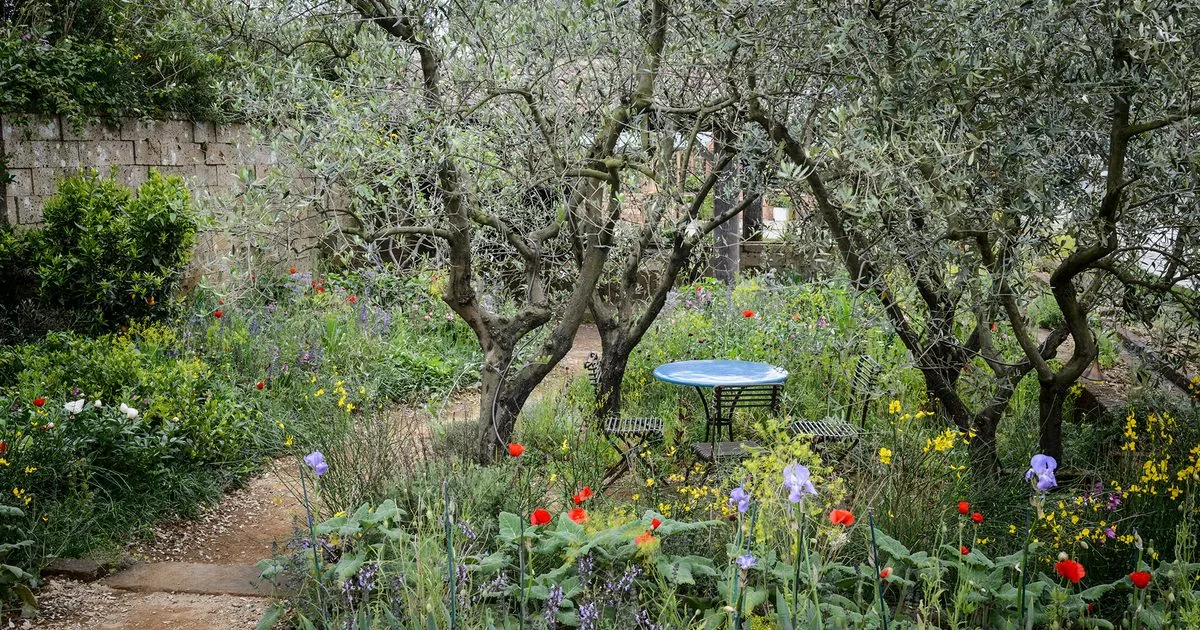
The olive tree you buy at the nursery is usually a polite little thing in a 30cm pot, about a metre tall, costing less than a decent dinner. The decision you make in the next five minutes, pot or ground, looks just as small. It isn't. Plant that olive in the wrong patch of ground and, a decade on, you can be paying to remove a five-metre tree whose roots have lifted the path and reached the neighbour's fence.
Here's the part nobody mentions at the checkout. In several parts of Australia, the same species, Olea europaea, is a recognised environmental weed. WA's Florabase lists it as a serious bushland weed, and the NSW Department of Primary Industries notes feral olives spread readily and resprout vigorously after they're cut. The tree the garden centre is selling you is, in the wrong context, the tree that bushland managers are trying to kill.
So before we get to potting mix and sun, let's name the real question. The olive doesn't care much whether it lives in a pot or the ground. It will tolerate both. The question is about you: how permanently are you committing to that spot? An olive in a pot is a houseplant decision. An olive in the ground is an infrastructure decision.
Sun First, Because Everything Else Is Secondary
If you take one thing from this article, take this: olives need full sun, and a pot does not change that rule. Six hours of direct light a day is the floor, not the target. More is better.
This trips up potted-olive owners constantly. I've watched someone park a healthy nursery olive on a shaded balcony "to protect it from harsh sun," then panic three weeks later when it dropped most of its leaves. The tree wasn't sunburnt. It was starved for light. An olive in shade goes leggy, sulks, stops fruiting, and becomes a magnet for scale and fungal trouble.
The pot's real advantage with sunlight is movement. You can chase the light across seasons, pull the pot to the warmest wall in winter, and rotate it for even growth. That portability is also your frost insurance: in a cold snap that would burn an in-ground tree, you simply wheel the pot under cover for a night. In the ground, you get one shot at placement. Pick a south or west aspect with no afternoon shadow from the house, or accept a tree that never performs.
The Trade-Off Nobody Wants to Admit
A pot restricts the roots. That's not a flaw to engineer around. It's the entire mechanism, and it cuts both ways.
Restricted roots mean a controllable, portable, frost-resistant tree that stays small enough for a courtyard or balcony. It also means a tree that dries out fast needs feeding because the soil volume is tiny, becomes root-bound every few years, and will never give you a serious crop. A potted olive is an ornamental with occasional olives, not an orchard.
The pot itself matters more than people expect. A dark plastic pot in full sun can cook the root ball on a hot day. Unglazed terracotta breathes but dries out fastest. A large glazed pot is usually the sweet spot. Whatever you choose, go bigger than feels necessary, at least 40 to 50cm across, and plan to refresh the top layer of mix each year and repot every two to three. The warning signs that you've left it too long are easy to read: water runs straight through without wetting the mix, roots circle the surface or escape the drainage holes, and growth stalls no matter how much you feed. A potted olive is a relationship with a watering can, not a plant-and-forget.
In the ground, the roots do what they evolved to do. The tree becomes genuinely drought-tolerant once established, shrugs off heat, and can actually fruit. The cost is that you've surrendered control. You can't move it, can't easily contain it, and can't undo the choice without a chainsaw and a stump grinder.
| Olive in a pot | Olive in the ground | |
| Best for | Renters, cold/marginal climates, small spaces | Committed growers, true Mediterranean climates |
| Sun needed | Full sun (6+ hrs) | Full sun (6+ hrs) |
| Water | Frequent, dries out fast | Low once established |
| Fruit | Light, ornamental | Real crops possible |
| Reversibility | Move or rehome any time | Removal is a project |
Wet Feet Kill Olives, Not Dry Ones
Most olives that die don't die of thirst. They drown. Olives evolved on rocky Mediterranean hillsides where water never sits, and they will rot in soil that stays soggy.
In a pot, you control the medium completely. A free-draining mix, a generous layer of coarse material, and drainage holes that actually work will keep an olive happy for years. The silent killer is the decorative saucer. Leave water pooling in it, and you've built a tiny swamp around the roots. I've seen more potted olives lost to a forgotten saucer than to any pest.
In the ground, your soil makes the decision for you. Heavy clay that holds water after rain is the enemy. Not sure what you've got? Dig a hole a spade deep, fill it with water, and let it drain. Fill it a second time and watch the clock. If it clears within a few hours, you're fine. If water is still sitting in the hole the next morning, plant on a raised mound or stay in a pot. On a poor site, that mound will do more for the tree than any fertiliser. Test the drainage before you dig the planting hole, not after the tree is in it.
The Bill That Arrives Ten Years Later
This is where the "small" decision shows its real size. An in-ground olive doesn't stay polite. It can reach five metres or more, and its root system is, in the words of Australian weed authorities, vigorous and persistent. Plant it too close to the house, the boundary, a paved path, or a sewer line, and those roots will eventually find the weak point. As a rough rule, keep a tree that can hit five metres well clear of structures and pipe runs. A few metres of breathing room now is far cheaper than a cracked path or a fence repair later.
Here is what actually happens. I've seen a Perth courtyard where a one-metre olive went in tight against a boundary fence because it looked neat at the time. Eight years on it was a dense four-metre tree, the fence palings were bowing where the thickening trunk had pushed against them, and surface roots had started lifting the paver edging on both sides. The owner's first instinct was to prune it hard and move on.
That's the trap that catches every DIY homeowner: you can't just cut an olive down. Olives resprout. Saw one off at the base, and it throws up a thicket of new shoots, often more vigorous than the original. Removing a mature olive properly means taking the stump out too, which is why a badly placed in-ground olive becomes a job for a professional rather than a Sunday with a handsaw. In that Perth courtyard, the answer wasn't pruning at all. It was full removal and stump grinding, plus repairs to the fence the tree had quietly wrecked. A specialist like Lakeside Trees and Stumps handles both the felling and the stump, so the tree doesn't simply grow back from the ground you thought you'd cleared.
None of this is an argument against planting olives in the ground. The tree did nothing wrong. It just grew, exactly as olives do, in a spot that never had room for it. It's an argument for choosing the spot as if you'll be living with it for twenty years, because you will.
So, Pot or Ground?
Choose the pot when you want optionality. Renters, cold or frost-prone climates, small courtyards, anyone who isn't certain this is the tree's forever home. The pot keeps your choices open.
Choose the ground when three things are true: you're in a genuine Mediterranean climate, you have a sunny spot with sharp drainage and real room to grow, and you actually want fruit. That combination earns the commitment. Anything short of it, and you're signing up for the removal bill before you've tasted a single olive.