Every remodeling article promises that kitchens "add the most value." That is broadly true, but the claim hides a more useful truth: not every dollar spent in a kitchen returns the same amount at resale.
If you are remodeling partly as an investment, it pays to know which choices move an appraisal and a buyer's heart, and which are purely for your own enjoyment. Both are valid, but only one shows up on the closing statement.
Each answer below stands on its own, so you can jump to the question that matters to your project.
Does a kitchen remodel actually add home value?
Yes, more reliably than almost any other room. A functional, updated kitchen is the space buyers weigh most heavily and appraisers can most easily justify. It is the room that can make or break a showing in the first minute.
The nuance is that value comes from condition and function, not from how much you spent. A tired kitchen drags a whole house down in perceived value, while a clean, well-executed one lifts it, which is why the kitchen is where a remodeling budget usually works hardest.
How much of a kitchen remodel do you recoup?
Recoup rates fall as the scope and price climb. A modest, well-targeted refresh returns the highest percentage, while an ultra-premium remodel returns the least of its cost even though it may still help the home sell. The table below shows the typical pattern.
| Remodel type | Typical cost | Value recouped at resale | Best for |
| Minor / midrange refresh | $15,000 - $30,000 | Roughly 70% - 85% | Sellers and value-focused owners |
| Full midrange remodel | $30,000 - $65,000 | Roughly 55% - 70% | Long-term owners updating a dated kitchen |
| Upscale / major remodel | $65,000 - $120,000+ | Roughly 45% - 55% | Owners staying years who want their dream kitchen |
These are typical ranges, not guarantees, and they shift with the market and the neighborhood. The takeaway is directional: the more you spend, the smaller the share you recoup, so match the ambition of the remodel to how long you plan to stay.
Which kitchen upgrades add the most value?
The highest-return moves are almost always about function and condition: replacing failing cabinets, fixing a cramped layout, updating worn countertops, and modernizing lighting. These are the changes an appraiser can point to and a buyer notices immediately.
None of them are flashy, and that is the point. A sensible, mid-tier kitchen in good condition beats a half-finished luxury project every time at resale. Spend first on the elements that make the kitchen work and read as cared-for, because those are the dollars that come back.
Which kitchen upgrades add the least value?
The lowest-return moves are the ultra-personal ones: a five-figure range chosen for bragging rights, a bold tile only you love, or finishes so high-end they outprice the neighborhood.
There is nothing wrong with spending on what you love if you plan to enjoy it for years, but be honest about which parts of the budget are for resale and which are for you. Buyers rarely pay a premium for someone else's splurge, and highly specific taste can even narrow your pool of interested buyers.
Does an open layout increase home value?
Usually, yes. Opening a closed kitchen to the dining or living area is the single change that most often makes a home feel larger and more current, and open-concept main floors remain what most buyers say they want.
The caveat is execution and structure. Removing a load-bearing wall requires a beam and a permit, and a sloppy opening looks worse than no opening at all. Done properly, though, it is one of the most value-additive moves in a whole home, not just the kitchen.
Do new appliances add resale value?
Clean, modern, matching appliances help a kitchen show well, but you rarely recoup the full cost of top-tier models. Mid-range appliances in a coordinated finish deliver most of the visual payoff for a fraction of the premium.
Buyers notice mismatched or aging appliances as a to-do list, so replacing an obviously old unit is worth it. Spending thousands extra on a professional-grade range you chose for yourself, however, is an enjoyment purchase more than an investment one.
How much should you spend relative to your home's value?
A common guideline is to keep a kitchen remodel in the range of 10 to 15 percent of the home's value. Spend far below that and the kitchen may undershoot the house; spend far above and you risk over-improving past what the property can return.
Use it as a sanity check, not a hard rule. A forever home justifies more than a five-year home, and a kitchen that is dramatically out of step with the rest of the house, in either direction, is the situation to avoid.
Does the neighborhood cap what you can recoup?
Yes, and this is the ceiling most homeowners underestimate. A kitchen should match the tier of the homes around it. Over-improving past your street's price band rarely returns the spend, because the neighborhood sets the range buyers will pay in.
A clean, mid-to-upper renovation in a solid neighborhood usually returns well, while a showpiece kitchen in a modest area returns poorly. Before you finalize a budget, look honestly at what nearby homes sell for and let that guide how far you push the finishes.
Do quartz countertops add value?
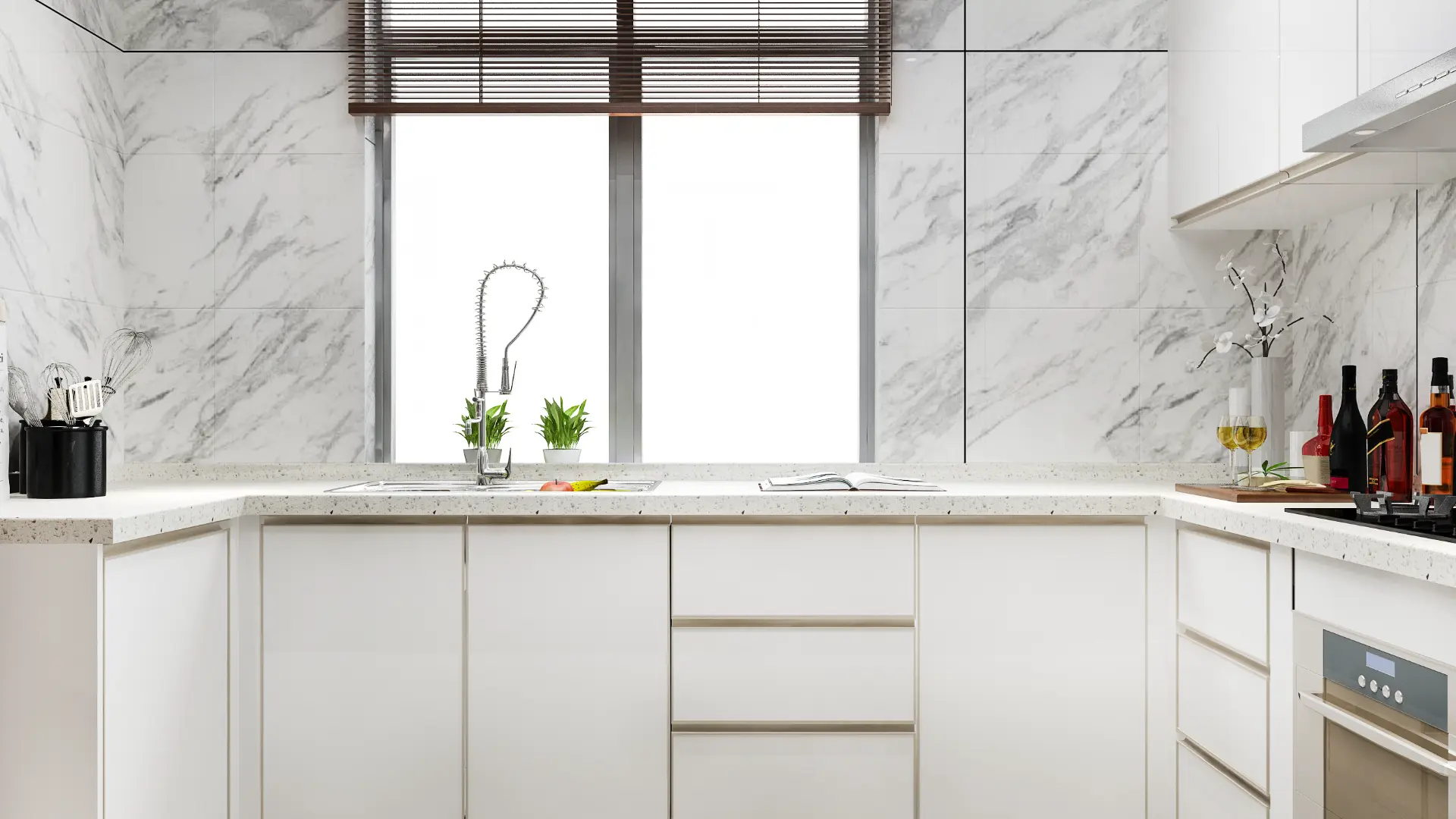
Quartz has become the surface buyers expect in an updated kitchen. It is durable, non-porous, and low-maintenance, and it reads as modern without the upkeep of marble, which makes it a safe, value-friendly choice.
Because it sits in the sweet spot between laminate and premium natural stone, quartz tends to satisfy appraisers and buyers alike. Exotic slabs and rare stones can add cost without adding proportional value, so for resale the dependable choice usually wins.
Does lighting affect appraisal?
Lighting rarely appears as a line item, but it changes how every other finish reads. A dim, single-fixture kitchen looks dated and small; a layered scheme with task, ambient, and accent light makes the same room feel larger and more expensive.
It is also one of the lowest-cost upgrades with an outsized effect on showings. Because buyers form an impression in seconds, good lighting quietly supports the value of everything it illuminates, from the counters to the cabinetry.
Does workmanship change what a kitchen appraises for?
Two kitchens with identical finishes can appraise and sell differently because one was installed cleanly and one was not. Straight cabinet lines, tight tile, and doors that close true signal quality to buyers and inspectors alike.
This is the argument for choosing an established kitchen remodeling company over the lowest bid: the finishes may be the same, but the execution is what holds value over time. Poor workmanship shows up as callbacks, inspection notes, and a kitchen that looks tired years before it should.
Should you remodel for resale or for yourself?
Remodel for how you actually live, then make the resale-smart choices where the two overlap. If you are staying for years, prioritize your own comfort and enjoyment, because you are the one using the kitchen daily.
If a sale is near, shift toward the neutral, broadly appealing choices that photograph well and pass inspection cleanly. The mistake is spending resale money on personal taste, or skimping on the functional basics that every buyer notices.
How soon before selling should you remodel?
A kitchen remodel completed shortly before listing delivers the strongest return, because the finishes are current and undamaged when buyers see them. A remodel done a decade earlier has usually absorbed wear and drifted out of style.
If selling within a year or two, a targeted refresh often beats a full remodel on return. If selling soon, focus on the visible, high-impact updates rather than a gut renovation you will barely enjoy before handing over the keys.
Does a minor remodel beat a major one for ROI?
On pure return percentage, yes. A focused minor remodel, new counters, refreshed or refaced cabinets, updated lighting and hardware, consistently recoups a higher share of its cost than a full luxury gut.
That does not make the major remodel wrong; it makes it a lifestyle decision rather than an investment one. If you want the dream kitchen and will live in it for years, spend accordingly. If the goal is return, the disciplined minor remodel is the smarter math.
Does refacing cabinets deliver the same value as replacing them?
When the existing boxes are solid and the layout is staying, refacing or refinishing can deliver most of the visual payoff of new cabinets for a fraction of the cost, which often improves the return on the project.
Buyers respond to how cabinets look and function, not to whether the boxes are original. If refacing gives you a fresh, modern kitchen at lower cost, the money saved effectively raises your ROI. Replacement makes sense mainly when the layout changes or the boxes are damaged.
How much does flooring affect a kitchen's value?
More than most homeowners expect. Flooring that flows continuously from the kitchen into adjoining spaces makes the whole floor feel larger and more cohesive, which reads as quality to buyers and supports the appraisal.
Durable, attractive flooring in a neutral tone is a safe, value-friendly choice. Mismatched or worn flooring, by contrast, undercuts even a beautifully finished kitchen, so it is rarely the place to cut corners when return matters.
Does adding an island pay off?
An island adds value when it improves flow and adds usable prep and gathering space, and it is one of the features buyers most actively want in a kitchen. It frequently becomes the most-used surface in the home.
The caveat is fit: an oversized island that crowds the walkways detracts rather than adds. Sized correctly to the room's clearances, an island is a strong, broadly appealing investment that supports both daily use and resale.
Do smart features and modern outlets matter to buyers?
Practical modern touches, ample outlets, USB charging, good task lighting, under-cabinet power, quietly signal an updated kitchen and cost little to include during a remodel. They meet the expectations of today's buyers.
Elaborate smart-home gadgetry, on the other hand, rarely returns its cost and can date quickly. The value is in sensible, current convenience rather than novelty, so prioritize the practical upgrades that everyone uses over the flashy ones few will.
How do you keep a kitchen broadly appealing?
Keep the permanent, expensive elements neutral and timeless, and confine bold personality to the cheap, swappable pieces like paint, hardware, and accessories. Broad appeal is what protects resale value.
A kitchen that reads as clean, current, and universally livable attracts the widest pool of buyers and the strongest offers. Highly specific taste narrows that pool, so save the daring choices for the elements a future owner can change in an afternoon.
Does the timing of a kitchen remodel affect its return?
Yes. A kitchen finished shortly before listing shows its finishes at their freshest, which maximizes buyer impression and return. A remodel done years earlier has usually absorbed wear and drifted in style by the time of sale.
For owners planning to stay, timing matters less than doing the work well. But if a sale is on the horizon, completing the remodel close to listing, and focusing on the visible, high-impact updates, captures the strongest return on the investment.
How do you protect a kitchen's value over time?
Choose durable, timeless materials, insist on clean workmanship, and maintain the finishes. A kitchen holds its value when it is built well and ages gracefully, rather than relying on trends that expire or corners that fail.
Quality installation is the quiet guardian of value: tight tile, true cabinet lines, and solid fixtures keep a kitchen looking current for years. Pair that with timeless choices and regular upkeep, and the room continues to return value long after the remodel.
The Bottom Line
Kitchens do add value, but the return lives in condition, function, and clean execution, not in how much you spend. Fix the layout, update the worn surfaces, modernize the lighting, and keep the ambition in step with your neighborhood.
Remodel for how you live, choose neutral where it counts, and hire for workmanship rather than the lowest number. Do that and your kitchen returns as much as a kitchen can, both in resale and in the years you spend using it.