A garage sitting unused, or used mostly for storage you could fit in half the space, represents something a lot of homeowners eventually notice: square footage you already own that isn't actually working for you. Converting that garage into livable space is one of the more cost-effective ways to add a bedroom, an office, or even a rentable unit, precisely because the hardest and most expensive parts of construction, the foundation, the framing, the roof, already exist.
That said, "cost-effective" does not mean cheap, and the range of what a garage conversion actually costs in 2026 is wide enough that a single number isn't very useful without context. National averages cluster around $16,000 to $18,000 for a straightforward conversion, but the real number depends heavily on what you're converting the garage into, what trades the project requires, and whether you're creating a simple extra room or a fully independent living unit.
This guide breaks down what garage conversions cost in 2026, how the number changes based on what you're building, the hidden costs that catch homeowners off guard, the permits and fire code requirements that apply, the tradeoffs worth weighing before you commit, and how to get a number you can actually rely on. ACON Engineering is a construction cost estimation and preconstruction consulting firm that helps homeowners get accurate, project-specific estimates for conversions and renovations of any scope.
How Much Does a Garage Conversion Typically Cost?
Across the major cost guides for 2026, the national average for converting a garage into a living space lands somewhere between $16,000 and $18,500, with most homeowners' projects falling in a broader range of roughly $6,000 to $33,000 depending on scope and finish level.
On a per-square-foot basis, costs typically run $25 to $75 per square foot for standard finishes, climbing to $50 to $150 per square foot for higher-end work involving plumbing, custom finishes, or full living-unit conversions. The reason garage conversions cost meaningfully less than a comparable new addition comes down to what you're not paying for. Since the structure, foundation, and roof already exist, converting an existing garage cuts the per-square-foot price by an estimated 40% to 60% compared to building an equivalent addition from scratch.
That said, "the garage already exists" only gets you so far. A garage is, structurally, a shell built for parking cars and storing tools, not for living in, and the work required to bridge that gap is where most of the actual cost lives.
How Does Cost Vary by What You're Converting the Garage Into?
The single biggest factor in your final number is not the size of your garage. It's what you're turning it into.
A simple bedroom conversion, finishing walls, adding flooring, lighting, and basic insulation, typically runs $5,000 to $17,000 on the lower end, or up to $25,000 to $55,000 depending on region and finish quality. This is the most affordable conversion type because it generally doesn't require plumbing.
A home office, gym, or playroom conversion sits in a similar or slightly lower range, since these uses often skip plumbing entirely and sometimes require less extensive HVAC work than a full bedroom suite.
A full apartment or accessory dwelling unit (ADU) conversion, complete with a kitchen and bathroom, is a different category of project entirely, typically running $20,000 to $100,000 or more nationally, and in higher-cost markets like California, $75,000 to $180,000 or beyond depending on size and finish level. This jump reflects the addition of full plumbing systems, a kitchen, a dedicated bathroom, and often a separate entrance, all on top of the insulation, electrical, and finish work every conversion requires.
What Hidden Costs Should You Budget For?
Garages are typically built with bare minimums: little to no insulation, minimal electrical capacity, and no plumbing at all. Converting one into livable space means adding everything a normal room takes for granted.
Insulation is almost always required, since garages are rarely insulated to the standard needed for year-round comfort. Walls, ceiling, and often the section where the garage door used to be all need insulation added before the space functions like the rest of your home.
Electrical upgrades are another near-universal requirement. Garages typically have minimal electrical capacity, often just enough for a light fixture and an outlet or two, far short of what a bedroom, office, or especially a kitchen requires. Expanding electrical service to support the new use is a standard line item in almost every conversion budget.
Plumbing, when a bathroom or kitchen is part of the plan, is often the single largest cost driver in the entire project, both because of the materials involved and because running new supply and drain lines into a structure that never had them is genuinely complex work. HVAC extension is the fourth major hidden cost, since a garage typically sits outside your home's existing heating and cooling system entirely, and connecting it, or installing a standalone unit, adds real cost most homeowners don't anticipate when they first start planning.
What Permits and Zoning Rules Apply to Garage Conversions?
Permit costs for a garage conversion typically run from a few hundred dollars up to $1,000 or more, depending on your location and the complexity of the project, but the permit fee itself is often the smaller concern.
Zoning regulations can complicate a garage conversion considerably, particularly when the conversion creates a separate dwelling unit (an ADU) rather than simply additional space within your home. Some cities have specific zoning permit requirements just for converting a garage that previously served as required parking into living space, since removing covered parking can conflict with local parking minimums. Beyond zoning, ADU conversions in particular often require additional project approvals, site plans, and architectural drawings, adding both cost and timeline. If you live in a homeowners association, you may face additional restrictions on exterior changes, parking requirements, or rental rules that don't apply to non-HOA properties.
What Fire Code Requirements Apply When Converting a Garage?
There's a fire code consideration that applies to garage conversions specifically, and it surprises a lot of homeowners because it runs in the opposite direction of what they expect: rather than fire-rated requirements disappearing once a garage stops being a garage, they sometimes become more relevant, not less.
When a garage conversion creates an accessory dwelling unit, the new space is treated as a legally separate dwelling unit under most building codes, distinct from the main home even though it sits on the same property. This classification typically triggers fire-resistance-rated separation requirements between the new ADU and the main house, similar in principle to the separation required for a duplex or other multi-unit structure, since two independent dwelling units sharing a common wall or structure generally require fire-rated construction between them under residential and international building codes. This applies even though the space was previously a garage and may have had different, or fewer, fire separation requirements when it served that original purpose.
A related situation comes up with partial conversions, where only part of a multi-bay garage gets converted to living space while the remaining portion stays a functioning garage. In that configuration, the same fire-rated separation requirement that applies to a standard attached garage, separating the working garage portion from any adjacent living space, still applies between the converted area and whatever garage space remains.
This is a scope item that's easy to miss in early budgeting, because most garage conversion cost guides focus on insulation, electrical, and plumbing without flagging the fire separation requirement specific to ADU classification or partial conversions. Fireproofing Estimating Services from ACON Engineering quantify exactly this kind of passive fire protection scope from project drawings, identifying the fire-resistance-rated assemblies required for your specific conversion type and producing a cost estimate for that scope before the project is bid, so it's part of the original budget rather than a surprise discovered during permitting.
What Are the Tradeoffs of Converting Your Garage?
A garage conversion adds living space, but it isn't free space. Converting it means trading one set of functions for another, and it's worth being honest about what you're giving up before committing.
The most obvious tradeoff is covered, secure parking. In neighborhoods with street parking restrictions, HOA rules, or harsh winter weather, losing a garage matters in a way that's easy to underestimate until you're actually parking on the street in February. Some buyers, when you eventually sell, will walk away from a home without a functioning garage entirely, regardless of how nice the converted space looks.
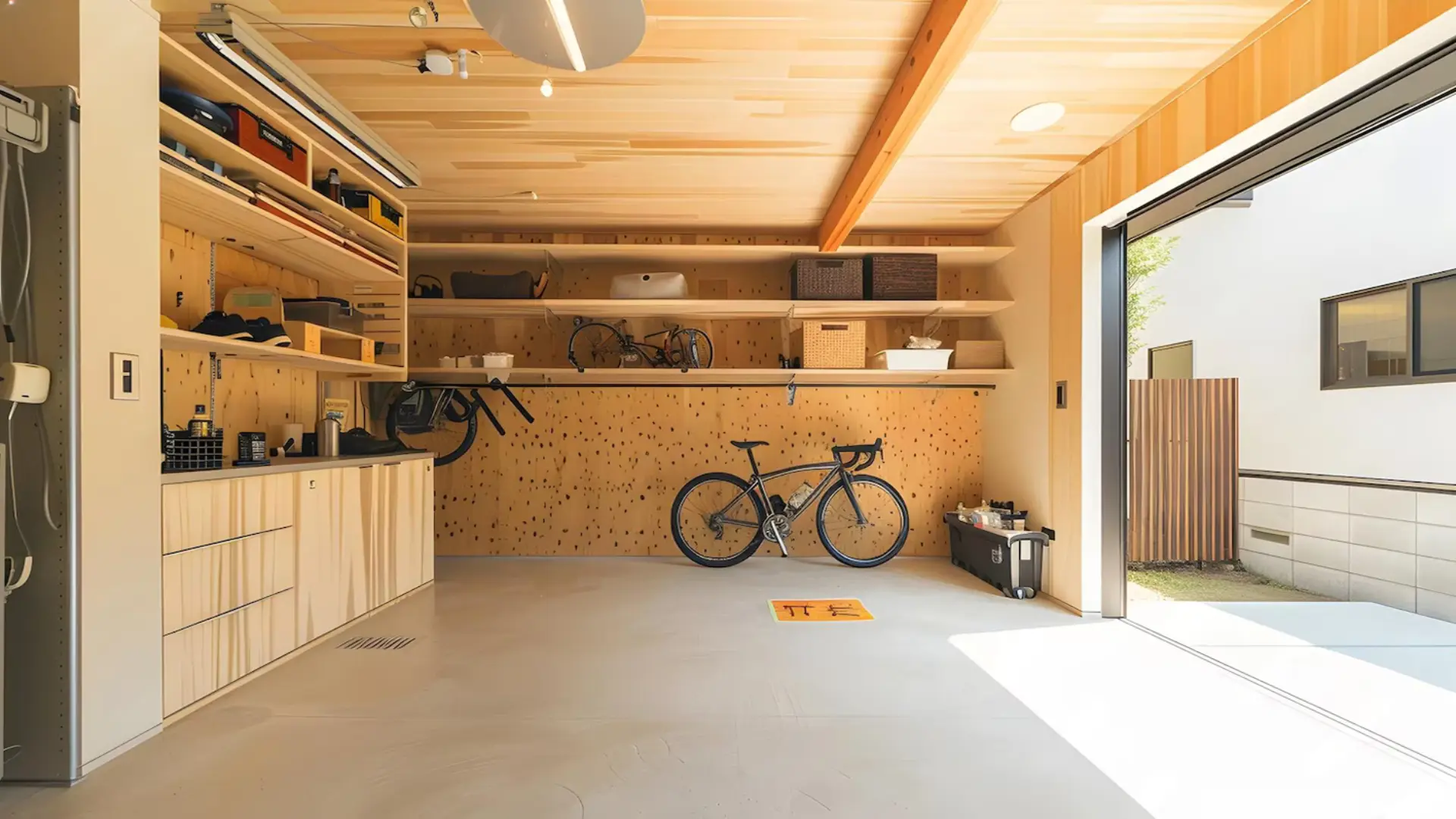
Storage is the second major tradeoff. Garages quietly absorb mowers, tools, bikes, holiday decorations, and the general overflow every household accumulates. Converting that space means finding somewhere else for all of it, whether that's a shed, typically $1,500 to $5,000, or an offsite storage unit running $75 to $200 per month indefinitely. And if you currently use the garage as a workshop space for woodworking, car maintenance, or hobby projects requiring ventilation and durable flooring, that capability disappears unless you've planned for it elsewhere.
None of this means a conversion is the wrong call. It means going in with a clear picture of the upgrade you're making and what it costs you functionally, not just financially, tends to produce homeowners who are happier with the decision a year later.
Is a Garage Conversion Worth It? ROI and Rental Income Potential
On the value side, garage conversions tend to perform well financially, though the specific return depends heavily on what the space becomes.
Average cost recovery sits around 80% for many garage conversions, meaning a $10,000 project might add roughly $8,000 in home value, though more conservative industry data places basic conversions closer to 50% to 65% cost recovery depending on market and finish level. Conversions that add genuinely valuable square footage, like a bedroom-bathroom combination, tend to recoup more value than lower-utility spaces like a home office or gym.
For ADU conversions specifically, the financial case extends beyond resale value into ongoing income. In competitive rental markets, a converted ADU can generate $1,200 to $2,500 or more per month, potentially offsetting the entire conversion cost within three to five years. This rental income potential is part of why garage-to-ADU conversions have become one of the more popular conversion types in markets facing housing shortages, since the same project that adds resale value can also generate cash flow while you still own the home.
How Do You Get an Accurate Conversion Estimate Before Hiring a Contractor?
Every range in this article represents a national average pulled from a wide variety of garages, regions, and finish levels. Your specific project, your garage's size, your local labor market, whether you're adding a bathroom, whether you're creating an ADU, all push your actual number toward one end of these ranges or meaningfully outside them entirely.
Construction estimating services from ACON Engineering produce trade-level cost breakdowns based on the actual scope of your specific conversion rather than general averages. Whether you're planning a simple bedroom conversion or a full ADU with kitchen and bathroom, ACON Engineering quantifies the insulation, electrical, plumbing, and finish scope specific to your project from drawings and specifications, then applies current market pricing to produce a number that reflects what you're actually building. This is especially valuable for ADU conversions, where fire-rated separation requirements, plumbing complexity, and zoning-driven design constraints can move the final number well outside what a generic per-square-foot estimate accounts for.
Conclusion
Converting a garage into living space in 2026 typically costs $16,000 to $18,500 on average, with simple conversions running as low as $5,000 to $17,000 and full ADU conversions reaching $20,000 to $100,000 or more depending on scope and location. The actual cost depends heavily on what you're building, what hidden costs like insulation, electrical, and plumbing apply, and whether the project triggers ADU-specific permitting and fire separation requirements.
Beyond the dollar figures, a garage conversion is a genuine tradeoff: you gain living space and potential rental income, but you give up covered parking, storage, and workshop functionality that the garage previously provided. For homeowners who've weighed that tradeoff and decided it's worth it, getting a number based on your actual project rather than a national average is the difference between a budget and a guess. ACON Engineering's construction and fireproofing estimating services exist to close that gap for homeowners planning a conversion of any size.