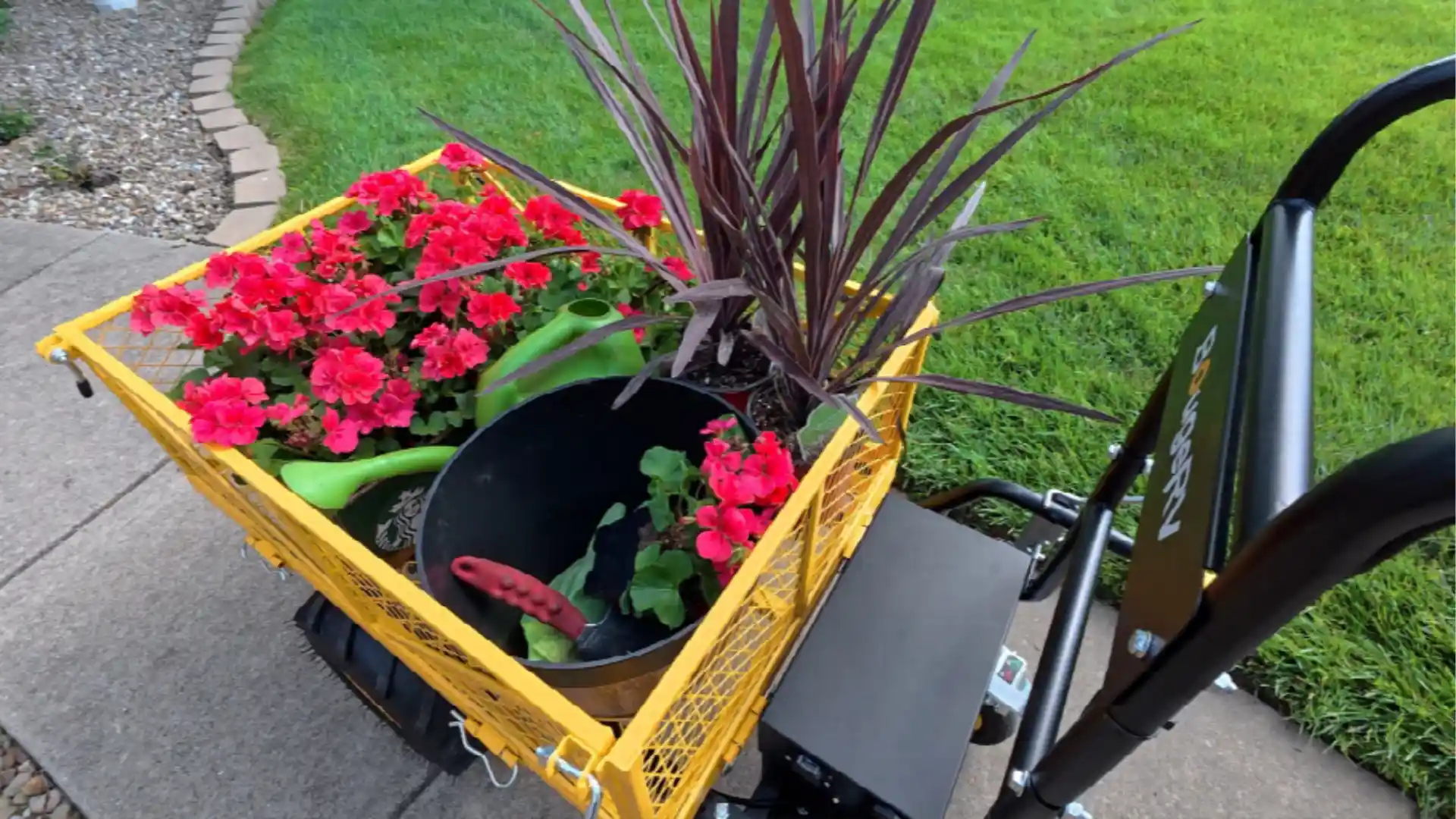
If you've spent hours pushing a traditional garden cart across your property, you know the struggle is real. Your back aches, your arms are tired, and you're only halfway through moving mulch from the front to the back. Now imagine a different scenario: you're riding comfortably while a motorized cart does the heavy lifting.
Electric garden carts represent a quiet revolution in home gardening and yard maintenance. They're not just luxuries for large estates—modern electric carts have become practical solutions for homeowners of all property sizes who want to work smarter, not harder.
Whether you're dealing with seasonal yard debris, maintaining extensive gardens, or simply want to preserve your body for activities you actually enjoy, an electric garden cart might be the game-changer your outdoor space needs. This comprehensive guide explores everything you need to know about electric garden carts and how they can transform your relationship with yard work.
The Problem with Traditional Garden Carts
Before discussing solutions, let's acknowledge the real frustrations with conventional carts:
Physical Toll
Pushing a 400-pound loaded cart isn't just tiring—it's risky. Repetitive strain injuries, lower back pain, and shoulder fatigue are common complaints from regular gardeners. As we age, this toll becomes increasingly problematic.
Limited Capacity and Frequency
Because manual carts require physical effort, most people make fewer trips with heavier loads, multiplying the strain. This creates an unpleasant choice: either work through pain or spend twice as long making lighter trips.
Terrain Limitations
Steep slopes, uneven ground, and muddy areas become genuine obstacles with manual carts. Many homeowners simply avoid certain yard maintenance tasks because navigating their property becomes too difficult.
Time Investment
What should be a straightforward yard task often consumes an entire Saturday. Heavy physical work leaves you exhausted instead of enjoying your beautiful outdoor space.
An electric garden cart addresses every one of these issues.
What Is an Electric Garden Cart?
An electric garden cart is a motorized vehicle designed specifically for transporting materials around residential properties. Unlike traditional pull or push carts, these use battery-powered electric motors to handle the work while you control direction and speed.
Most electric garden carts feature:
- •Rechargeable batteries (typically lithium or lead-acid)
- •Electric motors ranging from 300-1000 watts
- •Cargo beds with capacities between 600-1000 pounds
- •Steering controls that are intuitive and responsive
- •Adjustable speeds to match different terrain and load conditions
Think of an electric garden cart as the middle ground between a riding lawnmower and a traditional wheelbarrow. It offers motorized convenience without the massive footprint or complexity of larger equipment.
Real Advantages That Change Your Yard Routine
Dramatic Time Savings
With an electric garden cart handling the heavy lifting, you'll complete yard tasks in a fraction of the time. What previously consumed an entire Saturday might now take just a couple of hours. This isn't just about speed—it's about reclaiming your time.
Joint and Muscle Protection
Perhaps the most significant advantage for aging homeowners is the elimination of strain-related injuries. Your back, knees, and shoulders will thank you for stopping the repetitive stress. Many gardeners report being able to maintain their properties actively well into their 70s and 80s with motorized assistance.
Accessibility for Everyone
Mobility limitations no longer mean compromising on yard maintenance. Seniors, people with chronic pain conditions, or anyone recovering from injury can maintain their gardens independently with an electric cart.
Consistent Work Quality
Without the fatigue factor, you maintain better effort and focus throughout your yard projects. You're more likely to tackle projects thoroughly rather than leaving them half-done because you're exhausted.
Terrain Versatility
Electric carts handle slopes, soft ground, and uneven terrain that would be dangerous with manual carts. This means accessing every corner of your property becomes feasible.
Reduced Operational Costs
Compared to gas-powered equipment, electric carts are remarkably economical. Electricity costs are minimal, maintenance is simple (no oil changes or spark plugs), and batteries last for years with proper care.
Ideal Applications for Electric Garden Carts
Seasonal Yard Cleanup
Spring leaf removal, fall debris collection, and general yard cleanup become manageable. You can tackle these tasks solo rather than waiting for friends or hiring help.
Landscape Maintenance
Transporting mulch, soil, plants, gravel, or landscaping materials across your property no longer requires multiple people or extensive physical effort.
Garden Supply Storage
Rather than struggling with multiple manual trips, transport everything your garden needs in one powered journey.
Snow and Debris Removal
Winter maintenance and storm cleanup become less daunting when motorized assistance does the heavy work.
Material Transportation for DIY Projects
Building raised beds, constructing paths, or any project requiring material transport becomes achievable without hiring contractors or recruiting help.
Large Property Management
If you have several acres, an electric cart provides practical transportation beyond what manual options allow.
Maintenance for Aging Homeowners
Perhaps most importantly, electric carts allow dedicated gardeners to continue maintaining their beloved properties as they age, rather than outsourcing work or abandoning hobbies they love.
Key Features to Evaluate Before Purchasing
Motor Power and Performance
Look for motors between 500-1000 watts. More power handles steeper slopes and heavier loads but consumes battery faster. Match the motor to your typical terrain and cargo needs.
Battery Capacity and Range
Most quality electric garden carts run 4-8 hours per charge, depending on load and terrain. Larger batteries provide longer range but add weight and cost. Consider whether you need to work a full day or if mid-day charging is acceptable.
Load Capacity
Verify the cart can handle your typical loads. An 800-pound capacity is standard, but some models accommodate up to 1,200 pounds. Overloading reduces efficiency and can damage the motor.
Terrain Capability
Check the specifications for maximum slope angle. If your property includes steep grades, ensure the cart can handle them safely.
Turning Radius and Maneuverability
A smaller turning radius makes navigating around trees, flower beds, and obstacles easier. This becomes crucial on smaller properties with landscape features.
Build Quality and Durability
Look for rust-resistant frames, quality wheel construction, and weatherproofing. A cart that survives multiple seasons is worth the investment.
Cargo Bed Design
Consider whether you need tilting functionality for easier unloading. High sides prevent spillage, but low sides provide easier loading. Some models offer removable racks for versatility.
Weather Resistance
Quality electric carts withstand rain and varied weather conditions. Check whether the battery compartment and electrical components have adequate protection.
Comparing Electric Garden Carts: What Sets Quality Products Apart
When shopping for an electric garden cart, you'll encounter significant price variations. Budget models start around $1,500, while premium options exceed $4,000. The difference isn't just cosmetic—it's reflected in motor performance, battery longevity, build quality, and warranty support.
Premium manufacturers invest in engineering that extends battery life, improves terrain handling, and ensures components withstand years of regular use. A quality electric garden cart from an established brand like BougeRV combines robust engineering with practical features that actually improve your yard work experience.
The BougeRV cart line exemplifies this approach—designed specifically for homeowners who want reliable performance without unnecessary complexity. Their electric garden carts feature thoughtful engineering touches: proper weight distribution for safe towing, efficient motors that balance power with battery conservation, and cargo designs that accommodate everything from soil to seasonal decorations.
Battery Maintenance and Longevity
One of the biggest advantages of electric garden carts is minimal maintenance. Batteries are built to last 3-5 years with proper care:
- •Charge regularly (don't let them fully discharge)
- •Store indoors during extreme weather
- •Clean battery terminals periodically
- •Follow manufacturer charging guidelines
This simplicity contrasts sharply with gas-powered alternatives that require seasonal tune-ups, oil changes, and spark plug replacements.
Conclusion
Whether you're a dedicated gardener wanting to expand your activities, a homeowner seeking to work smarter, or someone determined to maintain property independence as you age, an electric garden cart deserves serious consideration. The technology is mature, the options are plentiful, and the benefits are immediately apparent.
As you evaluate options, research established manufacturers committed to quality and reliability. Look for models combining practical engineering with thoughtful features—like those found in the BougeRV cart offerings. When you're ready to invest in yard work efficiency, visiting BougeRV to explore their electric garden cart collection makes sense.