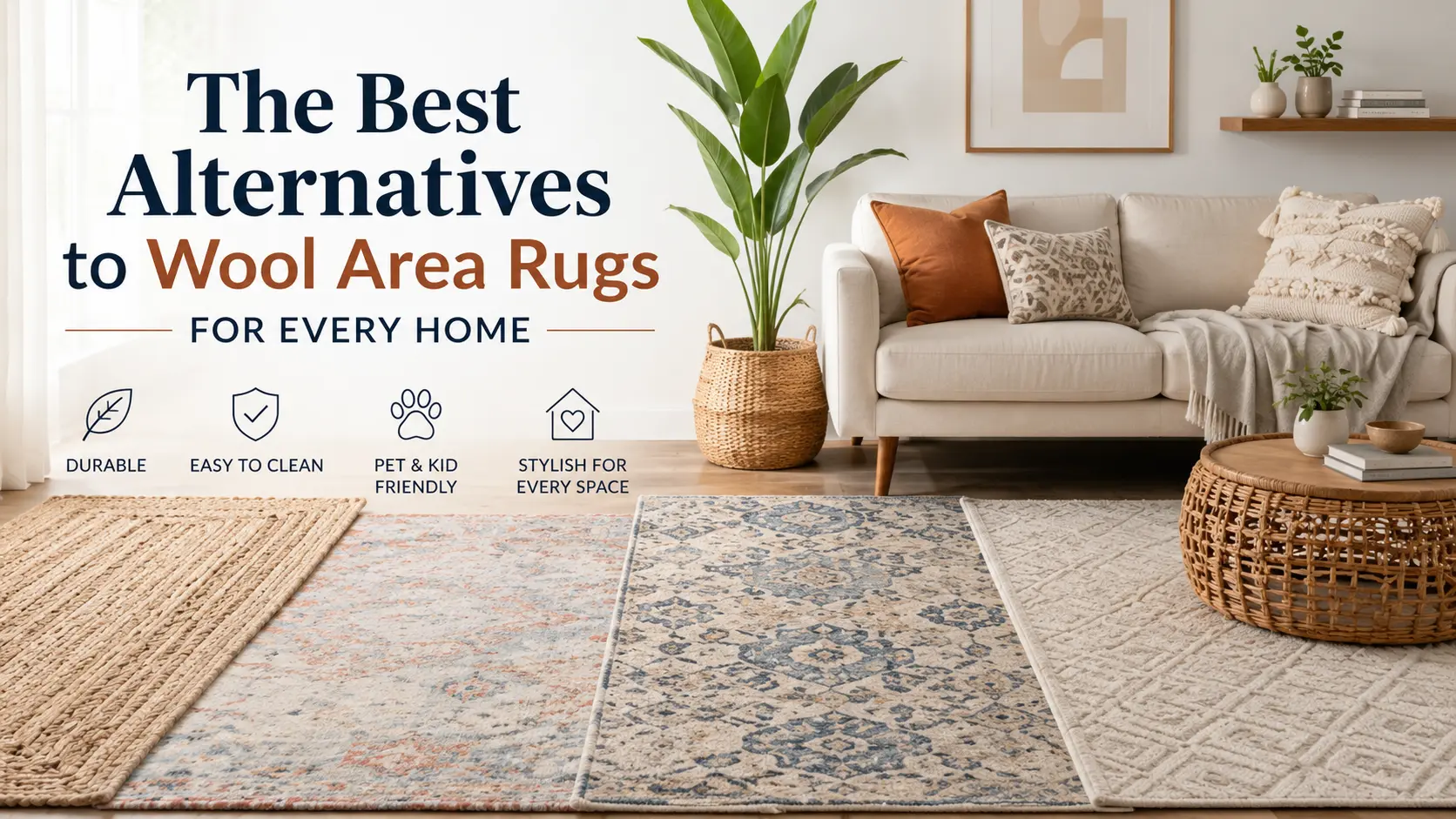
The best alternatives to wool area rugs include jute, sisal, seagrass, cotton, hemp, polypropylene, nylon, and polyester. Each material suits different needs: natural fibers like jute and sisal offer eco-friendly style, while synthetics like polypropylene excel in high-traffic or pet-friendly homes. The right choice depends on your budget, lifestyle, and space.
Wool has earned its status as the gold standard of area rug materials. It's soft, durable, naturally stain-resistant, and built to last decades. But there's a catch—a quality wool area rug can cost anywhere from $10 to $30+ per square foot, putting it well out of reach for many households. And for families with wool allergies, pet owners dealing with muddy paws, or anyone looking for a more sustainable option, wool simply isn't the answer.
The good news? The rug market Canada has never offered more variety. Whether you're drawn to the earthy charm of natural plant fibers, the practicality of modern synthetics, or the quiet luxury of silk alternatives, there's a material that matches both your aesthetic and your lifestyle.
This guide breaks down every major alternative to wool area rugs—covering their strengths, weaknesses, and the specific situations each one handles best. By the end, you'll know exactly which material belongs in your space.
Why Do People Look for Wool Area Rug Alternatives?
Before diving into the alternatives, it helps to understand why so many homeowners move away from wool in the first place.
Cost is the most common reason. While wool rugs offer outstanding longevity, the upfront investment is significant—especially for larger sizes. For budget-conscious shoppers, there are genuinely excellent materials that deliver comparable performance at a fraction of the price.
Allergies and sensitivities also push people toward alternatives. Some individuals react to lanolin, the natural oil found in wool fibers. Children and people with sensitive skin may find wool irritating, even at low contact levels.
Maintenance requirements are another factor. Wool rugs need careful, professional cleaning and can be damaged by excessive moisture. For homes with young kids, dogs, or cat-prone furniture scratching, easier-care materials make more practical sense.
Finally, ethical and environmental concerns motivate a growing segment of shoppers. Vegans avoid animal-derived materials entirely, while eco-conscious buyers look for rugs made from rapidly renewable plant fibers or recycled synthetics.
Natural Fiber Alternatives to Wool Area Rugs
Natural fiber rugs share several traits with wool: they're breathable, biodegradable, and free from synthetic chemicals. Each plant-based material has its own personality, though—so knowing the differences matters.
Are Jute Rugs a Good Replacement for Wool?
Jute rugs are one of the most popular wool alternatives on the market, and it's easy to see why. Made from the stalks of the jute plant—grown primarily in India and Bangladesh—these rugs bring a warm, earthy texture to any room. They're softer underfoot than sisal or seagrass, making them a more comfortable wool substitute for living rooms and bedrooms.
Best for: Low- to medium-traffic areas, casual living spaces, and eco-conscious homes.
Pros:
- •Biodegradable and sustainably produced
- •Softer than most other plant fibers
- •More affordable than wool
- •Can be dyed in natural and vibrant shades
Cons:
- •Absorbs moisture easily—unsuitable for bathrooms or humid climates
- •Less stain-resistant than wool
- •Not ideal for high-traffic zones where wear is constant
Jute performs best as a layering rug or as a statement piece in a low-traffic bedroom or reading nook. Keep it away from kitchens and entryways where spills and moisture are routine.
Are Sisal Rugs Durable Enough to Replace Wool?
Sisal comes from the agave plant, which is native to parts of South America and Africa. The fiber is so strong it's traditionally used to make rope—which tells you something about its durability. Sisal rugs handle foot traffic exceptionally well and are a smart choice for hallways, home offices, and stairs.
Best for: High-traffic areas, entryways, and households looking for a low-cost, long-lasting rug.
Pros:
- •Extremely durable—resists wear and tear in busy areas
- •Renewable and sustainable material
- •Naturally resists stains and responds well to cleaning
- •More affordable than wool
Cons:
- •Rough texture—uncomfortable on bare feet
- •Can become slippery over time on smooth floors
- •Susceptible to water damage and discoloration
Sisal is the practical pick over wool when durability matters more than softness. It's not the rug for barefoot lounging, but it's hard to beat in areas that take a beating.
How Do Seagrass Rugs Compare to Wool?
Seagrass grows in saltwater marshes and is harvested as a sustainable textile. Its defining feature is a natural waxy coating that makes it highly resistant to stains and moisture—something wool can't claim. Seagrass rugs are non-porous, meaning spills sit on the surface rather than soaking through, making them one of the easiest natural rugs to wipe clean.
Best for: Kitchens, entryways, bathrooms, and any space prone to moisture or spills.
Pros:
- •Outstanding stain and moisture resistance thanks to a natural waxy finish
- •Mold and mildew resistant
- •Affordable due to fast, easy cultivation
- •Durable and suitable for outdoor use
Cons:
- •Does not absorb dye well—limited color options
- •Firmer underfoot than wool or cotton
If you've avoided wool in the kitchen because of spill anxiety, seagrass is your material. The limited color palette is a real trade-off, but its practical performance is genuinely hard to match among natural fibers.
Are Cotton Rugs a Good Alternative to Wool for Bedrooms?
Cotton is the softest natural fiber alternative to wool and among the most versatile. Machine washable rugs —a major convenience that wool rugs simply don't offer. They're lightweight, easy to reposition, and come in an enormous range of colors and patterns.
Best for: Bedrooms, nurseries, low-traffic rooms, and warmer climates.
Pros:
- •Machine washable and easy to maintain
- •Soft and gentle underfoot
- •Hypoallergenic—safe for sensitive skin
- •More affordable than wool
- •Available in a wide range of styles and patterns
Cons:
- •Less durable than wool—wears down faster in high-traffic areas
- •Fibers can flatten over time
- •Not ideal for areas prone to heavy use
Cotton earns its place in bedrooms and children's rooms where softness and easy cleaning matter most. For a wool alternative that's genuinely family-friendly, cotton is hard to argue against.
Why Choose a Hemp Rug Instead of Wool?
Hemp is one of the most eco-friendly rug materials available. The hemp plant grows rapidly, produces significant oxygen per acre, requires minimal pesticides, and doesn't need replanting after harvest. Hemp rugs are naturally hypoallergenic, mildew-resistant, and surprisingly durable.
Best for: Allergy-prone households, eco-conscious shoppers, and medium- to high-traffic areas.
Pros:
- •Naturally hypoallergenic
- •Strong and durable
- •Mildew-resistant—handles humidity better than jute or sisal
- •One of the most environmentally sustainable rug materials available
- •Softens with use over time
Cons:
- •May shed initially
- •Less vibrant color range compared to wool or synthetic options
Hemp lacks the immediate softness of wool, but it improves with age and outperforms most plant fibers on sustainability credentials. For anyone prioritizing both ethics and durability, hemp is an underrated choice.
Synthetic Alternatives to Wool Area Rugs
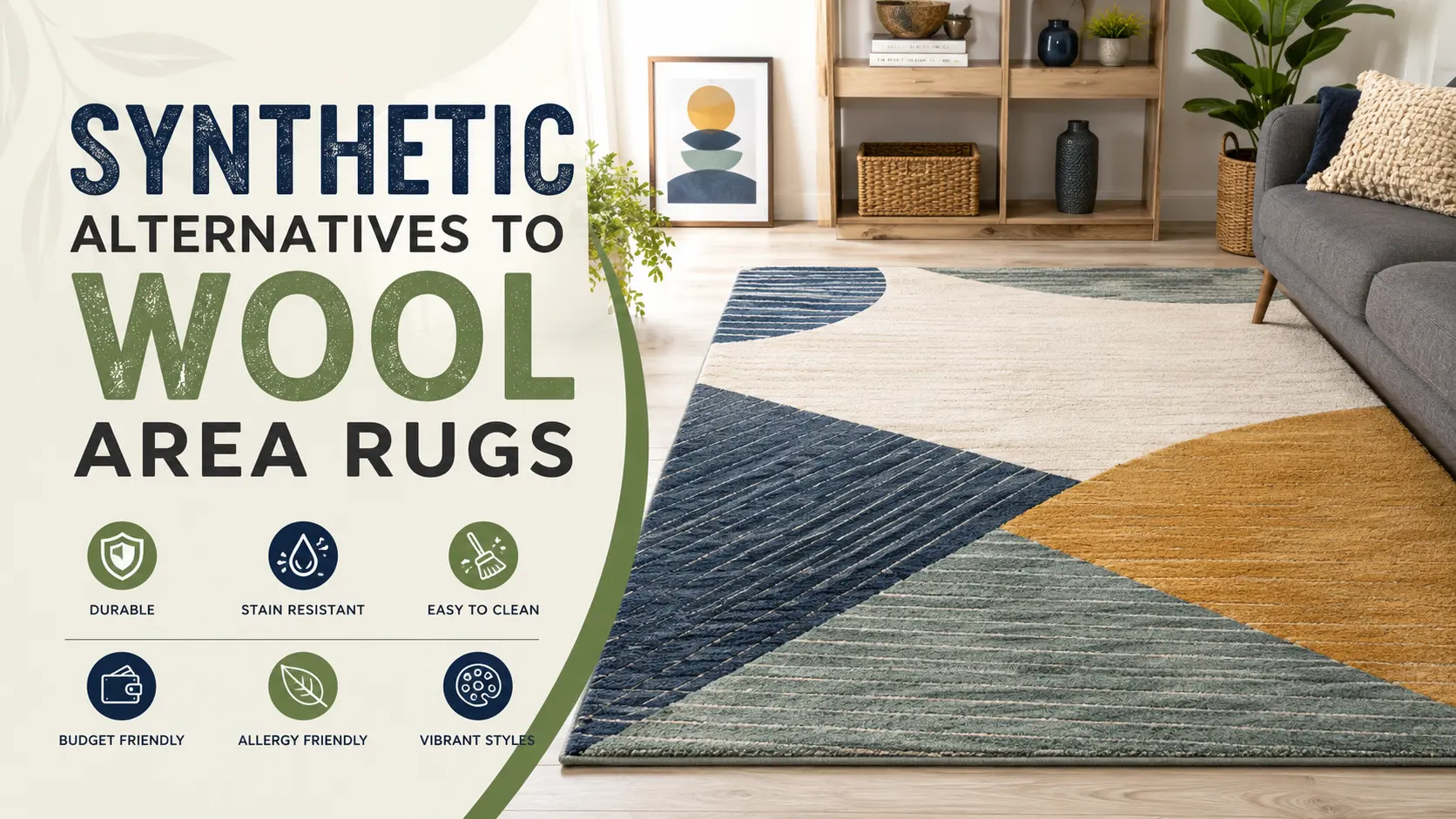
Synthetic rugs are manufactured from engineered materials like polypropylene, nylon, and polyester. They tend to be more affordable, easier to clean, and better suited to challenging environments than natural fibers.
Are Polypropylene (Olefin) Rugs Better Than Wool for Pets and Kids?
Polypropylene—also called olefin—is the most popular synthetic rug material for a reason. It's aggressively stain resistant, water resistant, fade resistant, and built to handle constant use. Many outdoor rugs are made from polypropylene because it resists moisture and won't develop mold or mildew.
Best for: Homes with pets or children, outdoor spaces, high-traffic areas, and budget-focused shoppers.
Pros:
- •Exceptional stain and moisture resistance
- •Fade-resistant in direct sunlight—ideal for patios
- •Highly durable and easy to clean (often hose-down friendly)
- •Most affordable of all rug materials
Cons:
- •Lacks the plush, luxurious feel of wool
- •Prone to flattening under heavy furniture
- •Can melt or distort under high heat
Polypropylene is the practical answer to wool for households where spills, pets, and heavy foot traffic are facts of life. The trade-off is comfort—it won't feel as soft underfoot—but for everyday resilience, it's the top synthetic performer.
Can Nylon Rugs Match Wool's Durability?
Nylon is often described as the closest synthetic match to wool. It holds its pile shape better than polyester, resists crushing, and wears well over time. For anyone who loves the look and structure of a wool rug but wants lower maintenance and a lower price point, nylon is the natural upgrade from polypropylene.
Best for: High-traffic living rooms, dining rooms, and anyone who wants wool-like durability without wool's maintenance demands.
Pros:
- •Excellent durability—resists crushing and flattening better than polyester
- •Easier to clean than wool
- •Available in a wide range of styles and patterns
- •More affordable than wool
Cons:
- •Not as environmentally sustainable as natural fibers
- •Less soft than wool underfoot
What About Polyester Rugs as a Wool Alternative?
Polyester rugs sit at the budget end of the synthetic spectrum. They're stain resistant, available in vivid colors, and soft enough for casual use. The main limitation is longevity—polyester fibers crush more easily than nylon and may show wear faster in high-traffic areas. That said, for a secondary room or a space that doesn't see heavy footfall, polyester delivers good value.
Best for: Low-traffic bedrooms, guest rooms, and shoppers working with a tight budget.
Bamboo Silk Rugs: A Luxury Wool Alternative Worth Considering?
Bamboo silk—also sold as art silk, viscose, or Tencel—has surged in popularity as a lower-cost alternative to genuine silk. These rugs have a beautiful, lustrous sheen and a soft texture that mimics expensive silk rugs at a fraction of the price.
However, bamboo silk comes with serious practical caveats. The viscose fiber reacts poorly to water and liquids—even water spills can permanently alter the pile's appearance. Staining is a major risk, and professional cleaning doesn't always guarantee full restoration. Bamboo silk rugs crush easily under foot traffic and are best treated as decorative pieces rather than functional floor coverings.
Best for: Low-traffic decorative spaces—reading corners, formal sitting rooms, or display areas.
Avoid in: Dining rooms, kitchens, households with children or pets, or any area where spills are possible.
How to Choose the Right Wool Alternative for Your Space
With so many options, the right choice comes down to a few key questions:
- •High foot traffic? Choose sisal, polypropylene, or nylon.
- •Pets or young children? Polypropylene or seagrass handles spills best.
- •Bedrooms or nurseries? Cotton or jute offers softness without the wool price tag.
- •Eco-conscious priorities? Hemp, jute, sisal, and seagrass are all sustainably sourced.
- •Allergies to animal fibers? Any plant-based fiber or synthetic will work—cotton and hemp are particularly hypoallergenic.
- •Moisture-prone areas like kitchens or bathrooms? Seagrass and polypropylene resist water the best.
- •Luxury look for a low-traffic room? Genuine silk or bamboo silk (with careful maintenance) creates impact without wool's cost.
No single material does everything wool does, but most situations have a clear winner.
The Right Rug Is Out There—You Just Need to Know Where to Look
Wool is remarkable, but it's far from your only option. Natural fibers like jute, sisal, hemp, and seagrass each bring their own strengths to the floor, while synthetics like polypropylene and nylon offer durability and practicality that wool can't always match. Cotton brings softness and easy care to quieter spaces, and bamboo silk adds a touch of glamour where it's least likely to be tested.
The best move is to match the material to the room. Think about foot traffic, moisture exposure, who uses the space, and what you're willing to spend on maintenance. Once those boxes are checked, you're more than halfway to the right choice.