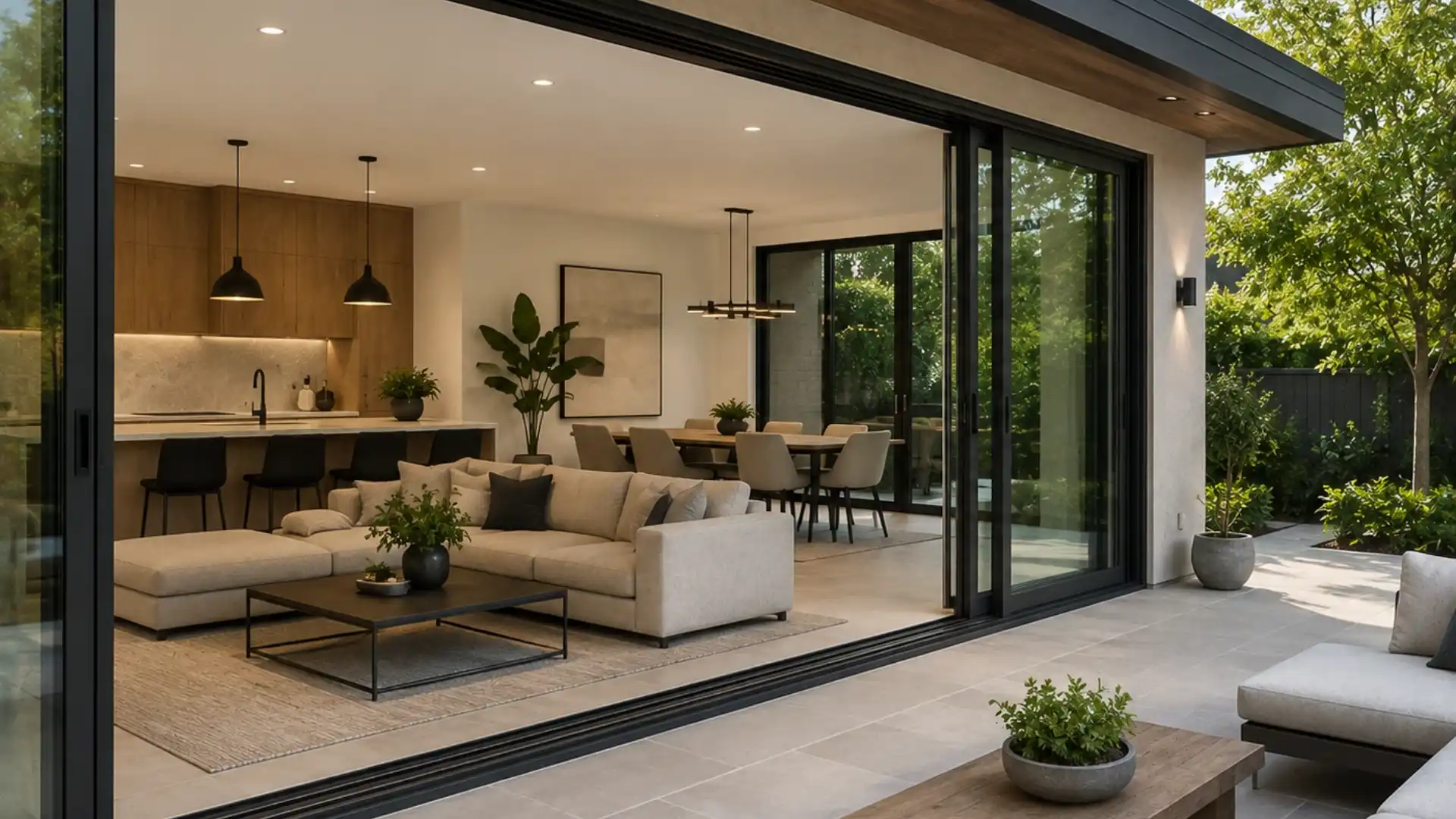
Walk through any newly built neighbourhood and a pattern starts to emerge. Large glass panels, slim dark frames, and doors that seem to disappear into the wall when opened have become defining features of modern residential design. Much of this shift traces back to a single material choice, aluminum, which has moved from a purely functional option into one of the most requested materials for doors in contemporary homes.
As demand has grown, homeowners and builders alike have started paying closer attention to sourcing, often turning to an established doors manufacturer china to access the range of designs driving this trend.
Why Aluminum Took Over From Traditional Materials
For decades, timber and steel dominated residential door construction, each with its own strengths and limitations. Timber offered warmth and natural texture but required regular maintenance and was prone to warping in humid or coastal climates. Steel provided strength but came with a heavier appearance and a tendency to corrode over time without proper treatment. Aluminum entered the picture as a material that solved several of these problems at once, offering strength without excessive weight, resistance to corrosion, and a slim profile that allows for larger glass sections without compromising structural integrity.
This combination made aluminum particularly appealing as architectural trends shifted toward open, light filled interiors. Homeowners wanted bigger windows and doors that blurred the line between indoor and outdoor spaces, and aluminum's strength to weight ratio made that possible in ways older materials struggled to match.
The Slim Frame Effect on Modern Design
One of the most visible ways aluminum has changed home design is through frame thickness. Traditional door frames, particularly in timber, needed to be relatively thick to maintain structural stability, which limited how much glass could be incorporated into a single door or window unit. Aluminum frames can be significantly slimmer while still supporting large glass panels, which has directly influenced how architects and designers approach openings between indoor and outdoor living spaces.
This slim frame aesthetic has become closely associated with contemporary and minimalist design styles, where clean lines and unobstructed views take priority over ornate detailing. Sliding and bifold aluminum door systems, in particular, have become a defining feature of homes designed around indoor outdoor living, allowing entire walls to open up rather than relying on a single fixed opening.
Durability Driving Long Term Design Decisions
Beyond aesthetics, aluminum's durability has changed how homeowners think about long term design choices. A material that resists rust, does not warp with humidity changes, and requires minimal maintenance over its lifespan allows design decisions to be made with less concern about how a door will hold up decades down the line. This has given architects more freedom to specify larger, more ambitious door and window configurations without worrying as much about long term upkeep issues that older materials would have introduced.
For homeowners, this durability also translates into fewer replacement cycles, which matters both from a cost perspective and increasingly from a sustainability standpoint, since fewer replacements mean less material waste over the life of a home.
Energy Efficiency Improvements Changing Perceptions
Aluminum doors used to carry a reputation for poor thermal performance compared to timber, since metal conducts heat and cold more readily. This has changed significantly with the introduction of thermal break technology, which separates the interior and exterior aluminum sections with an insulating barrier, greatly reducing heat transfer. This improvement has made aluminum a viable option even in climates with significant temperature swings, expanding its appeal well beyond the moderate climates where it was traditionally more common.
This shift matters for design because it removes one of the last major objections builders and homeowners had toward aluminum doors, allowing the material's aesthetic and structural advantages to be considered without the same energy efficiency trade offs that used to apply.
Customisation Options Expanding Design Possibilities
Modern aluminum door systems come in a wide range of finishes, from matte black and bronze tones to more traditional silver and white options, giving designers flexibility to match a door's appearance to the broader style of a home. Powder coating technology allows for durable, long lasting colour finishes that resist fading and chipping, which has further expanded how these doors are used in design schemes ranging from industrial style homes to more traditional builds looking for a subtle modern touch.
This range of customisation has made aluminum doors adaptable across a much wider variety of architectural styles than earlier generations of the material allowed, contributing to its growing presence across different types of residential projects.
What This Means for Future Home Design
As aluminum door systems continue to improve in both performance and design flexibility, their influence on residential architecture is likely to grow further. Builders and designers who once viewed aluminum purely as a practical, budget conscious choice increasingly treat it as a design forward material capable of defining a home's overall aesthetic, particularly in projects centred around open, light filled living spaces.
Final Thoughts
Aluminum doors have moved well beyond their original reputation as a purely functional material. Their combination of slim profiles, long term durability, and improved energy performance has reshaped how architects and homeowners approach door and window design, particularly in homes built around open, connected living spaces. As the technology behind aluminum systems continues to advance, its role in shaping modern residential design is only likely to expand further.